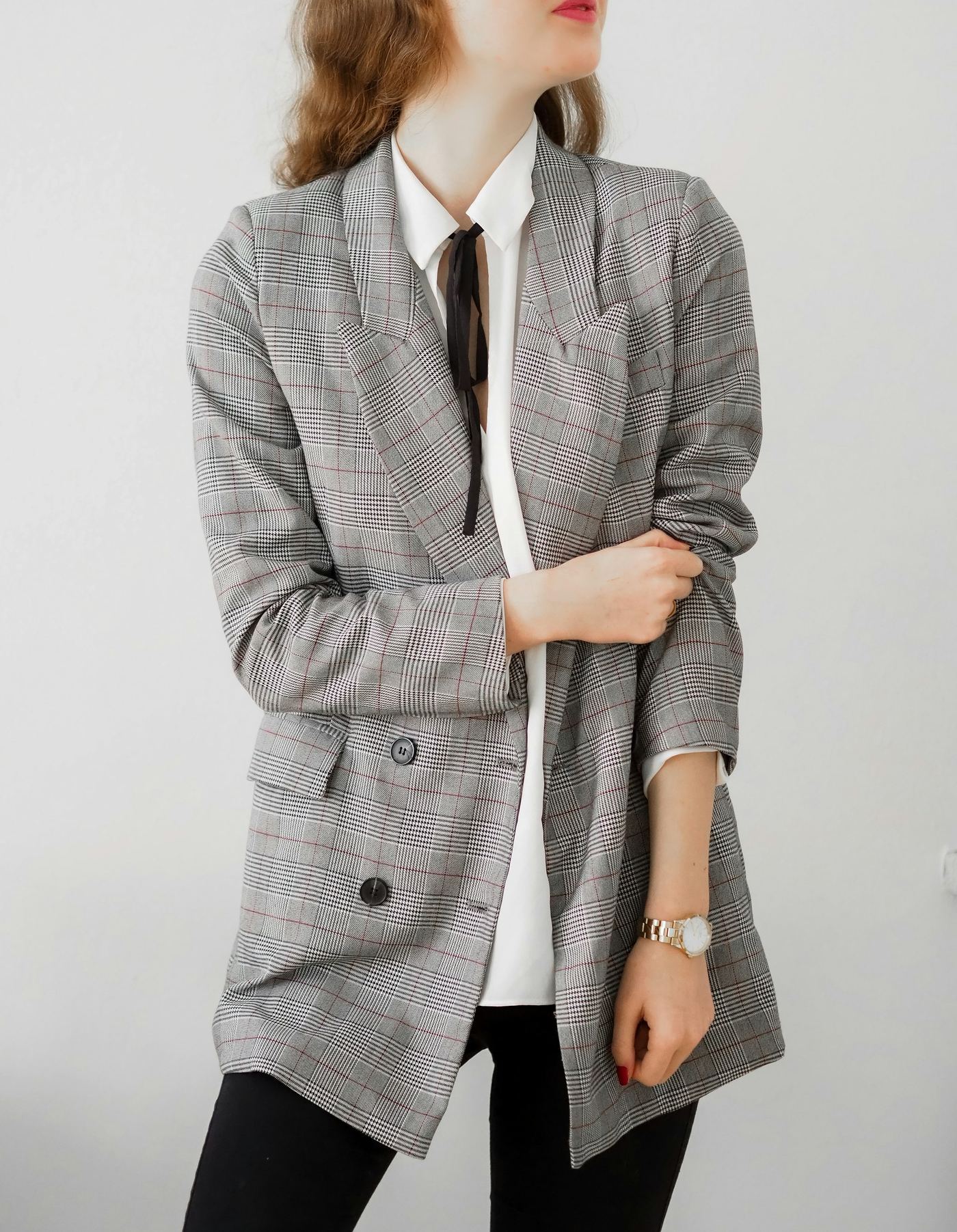
Checks, tartan and houndstooth are everywhere this season. Learn the difference between them and how to wear each pattern without looking costume-like.
Checks are one of the most reliable patterns in fashion, and this autumn they are back in almost every form: preppy tartan skirts, equestrian-style jackets, grunge flannels and sharp tailoring. The challenge is not finding a check you like. It is learning how to wear it so that it looks polished and personal rather than like a school uniform. This guide breaks down the main types and gives practical outfit formulas for each.
Know your patterns
- Tartan or plaid: crossing stripes of different widths, traditionally in wool. It brings the most colour and character.
- Houndstooth: a broken, pointed check, usually in two colours. It looks smart and slightly vintage.
- Gingham: a small, even check, usually in white and one colour. It reads lighter and works in cotton and lightweight knits.
- Windowpane and glen check: large, subtle grids that suit tailoring and are the easiest to wear to work.
The one-pattern rule
The easiest way to wear checks well is to let them be the only pattern in the outfit. Pair a checked blazer, skirt or trousers with plain pieces in a colour pulled from the pattern. A grey plaid blazer looks effortless over a white tee and black trousers. A brown and cream check skirt works with a cream knit and brown boots. Once you are comfortable, you can add a second pattern in a very different scale, such as a fine stripe under a bold check, but start simple.
Four outfit formulas
- Office: a grey glen check blazer, a white poplin shirt, straight black trousers and loafers.
- Weekend: an oversized flannel shirt worn open over a ribbed tee, relaxed jeans and white trainers.
- Evening: a tartan mini or midi skirt, a black fitted knit, sheer tights and ankle boots.
- Layered: a checked scarf or shawl over a camel coat for the lowest-effort way into the trend.
Scale and proportion
Large checks make an area look bigger, small checks make it look smaller and more refined. If you want to draw attention to the top half, choose a big check on a blazer. If you prefer a streamlined line, choose a small check in a dark colourway. Tailored cuts keep checks looking grown-up, while oversized cuts push them towards the grunge and boho mood that is also trending.
What to buy and what to skip
Pattern shows quality quickly. Look at the seams: on a good checked garment, the lines should meet neatly at the side seams and across the front. Wool and wool blends hold shape and keep you warm, while thin polyester checks can look flat and shiny. If you are building a capsule wardrobe, a single classic blazer or skirt in a neutral check will be worn more often than a bright seasonal piece.
The takeaway
Choose one check, keep everything else plain, and pick a quality fabric. A well-cut checked blazer is a rare trend piece that you can wear for years, which makes it a smart buy even if you are trying to shop less.
Frequently asked questions
What is the difference between tartan and plaid?
Tartan is a specific woven pattern with traditional colour combinations, while plaid is the broader term used in fashion for crossing-stripe checks. Most shops use the two words interchangeably.
Can I mix checks with stripes?
Yes, if the scales are very different. Pair a large check with a fine stripe and keep both in the same colour family.
Which check is easiest to wear to work?
A grey glen check or windowpane blazer is the easiest. The pattern is subtle and pairs with plain shirts and trousers.


